

XII. Congress of the World Society of Emergency Surgery 2025
The Significance of the Congress Logo
Hadrian’s Gate: A Timeless Symbol of Antalya’s Rich History
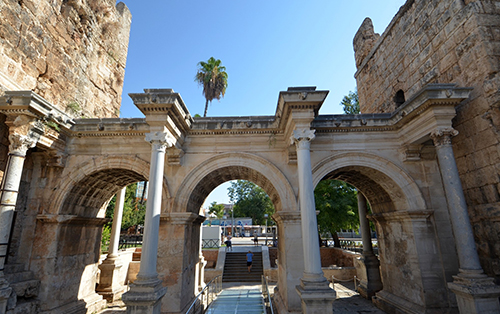
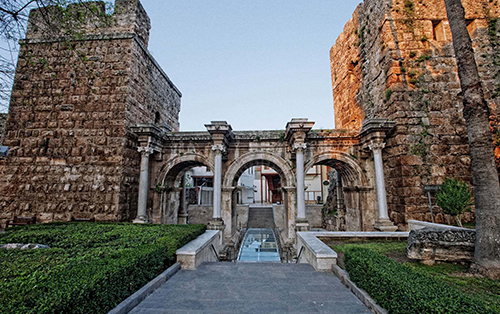
Hadrian’s Gate, also known as Üçkapılar (Three Gates), is one of Antalya’s most iconic landmarks, standing as a remarkable testament to the city’s long and diverse history. Built in honor of the Roman Emperor Hadrian’s visit to the city in 130 AD, this ancient triumphal arch is not only a historical monument but also a symbol of the cultural richness and architectural mastery of the Roman Empire.
The gate, located at the entrance of Antalya’s old town, Kaleiçi, consists of three majestic arches adorned with intricate reliefs and columns. Constructed from white marble, the structure stands tall and proud, offering a glimpse into the grandeur of the Roman period. The central arch, the largest of the three, was designed to allow the emperor and his entourage to pass through during their visit, highlighting the importance of the occasion. The two smaller side arches were likely intended for the citizens of the city.
The architectural style of Hadrian’s Gate reflects the classical Roman period’s penchant for monumental structures. The design incorporates both Roman and Greek influences, featuring Corinthian columns, detailed carvings, and decorative motifs that showcase the artistic and engineering skills of the time. The reliefs on the gate depict scenes of the emperor’s triumphs and divine protection, offering valuable insight into the political and religious beliefs of the period.
Hadrian’s Gate is not just a relic of the past but a living link between ancient and modern Antalya. It serves as a portal through which visitors can step back in time to witness the grandeur of a city that has been home to several ancient civilizations. Over the centuries, the gate has stood the test of time, surviving earthquakes, invasions, and the wear and tear of history, and it remains an enduring symbol of Antalya’s rich cultural heritage
The significance of Hadrian’s Gate goes beyond its architectural beauty. It represents the crossroads of history where different civilizations—Greek, Roman, Byzantine, and Ottoman—have left their mark on the city. Its preservation is a reminder of the importance of cultural heritage and the need to protect and celebrate historical monuments for future generations.
Today, Hadrian’s Gate remains a popular tourist attraction, drawing visitors from around the world who come to admire its beauty, learn about its history, and take in the picturesque views of the surrounding old town. It is not only a gateway to Antalya but also a gateway to the past, offering a glimpse into the rich history of this ancient city.
For the XII. Congress of The World Society of Emergency Surgery 2025 Antalya , the inclusion of Hadrian’s Gate as the logo is a fitting tribute to the timeless nature of knowledge, culture, and progress. Just as the gate has welcomed countless visitors throughout history, it now symbolizes the exchange of ideas and the global collaboration that will take place during the congress. Hadrian’s Gate is a perfect representation of how the past and the future come together, opening new doors to understanding and innovation.